



On the Future of Grief: An Exploration on Mourning in the Digital Age.
Name(s) of graduate(s):
Giuliana Mei
2025
Description
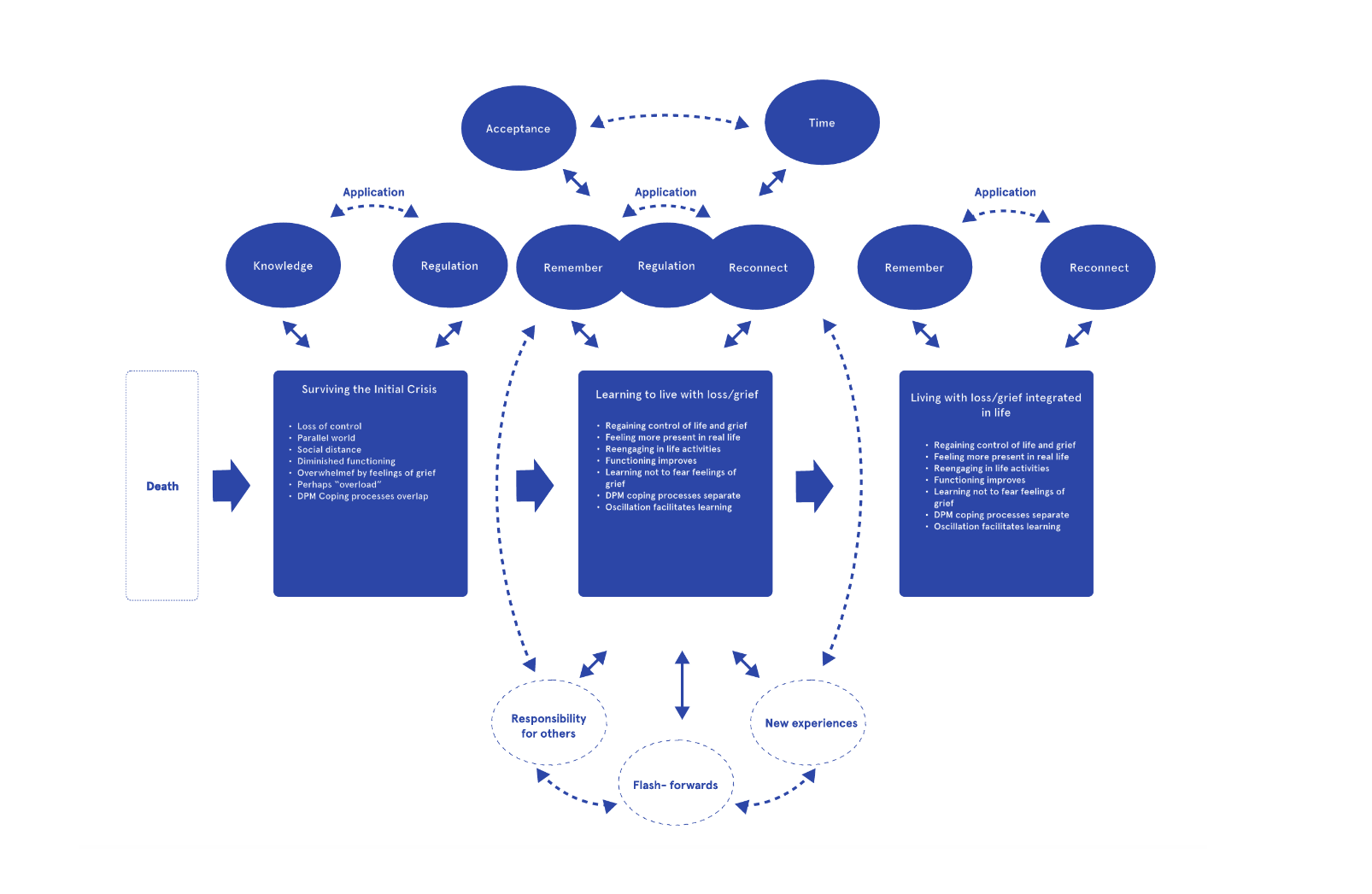
Grief is universal, but the places where we grieve are disappearing. People move away, family structures dissolve, cemeteries are visited less frequently. Sociologist Thorsten Benkel calls this phenomenon the “delocalization of grief”. Against this background, the work asks how digital spaces can enable new forms of remembering, grieving, and connection. Psychologically, grief is understood as a dynamic process between loss and restoration orientation (Dual Process Model, Stroebe & Schut, 1999). Methodologically, the work follows a theory-guided HCI design approach at the intersection of psychology, anthropology, and human-computer interaction, and results in a conceptual prototype with three functions: a non-linear memory archive, a soft haptic pillow that makes breathing exercises physically tangible, and regenerative impulses for offline rituals – a draft of what grief could look like in the digital age.
 Link to Video
Credits Video: Giuliana Mei