
Spurensammler – Eine Materialgeschichte
Name(s) of graduate(s):
Karoline Heyde
2025
Description
Today, our everyday objects are usually designed for short lifespans: They are produced cheaply and replaced as soon as the first signs of wear and tear become visible. Scratches, dents, or signs of usage are often seen as flaws. But what if these very traces were to increase the value of an object and make it more personal and meaningful through its use?
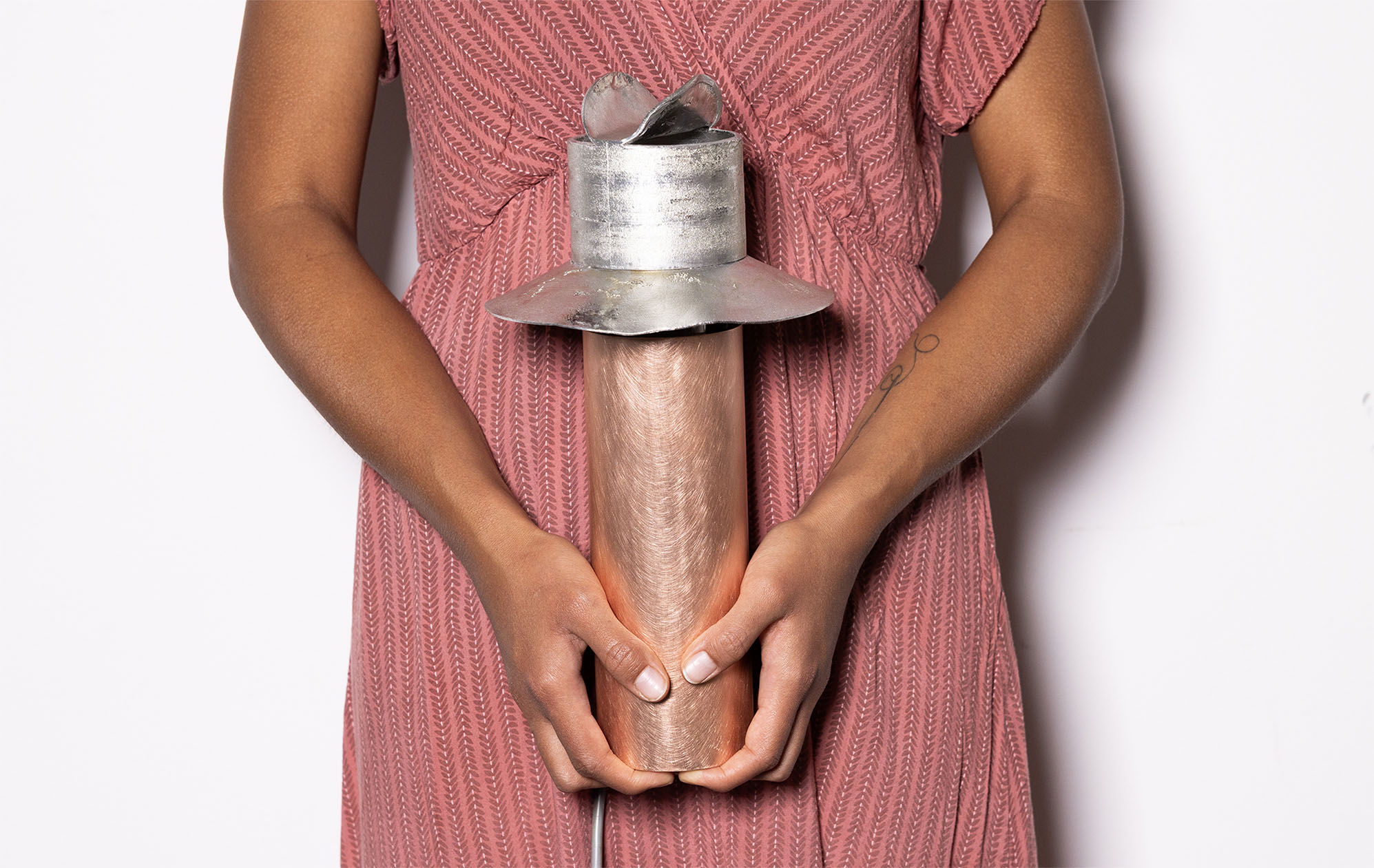
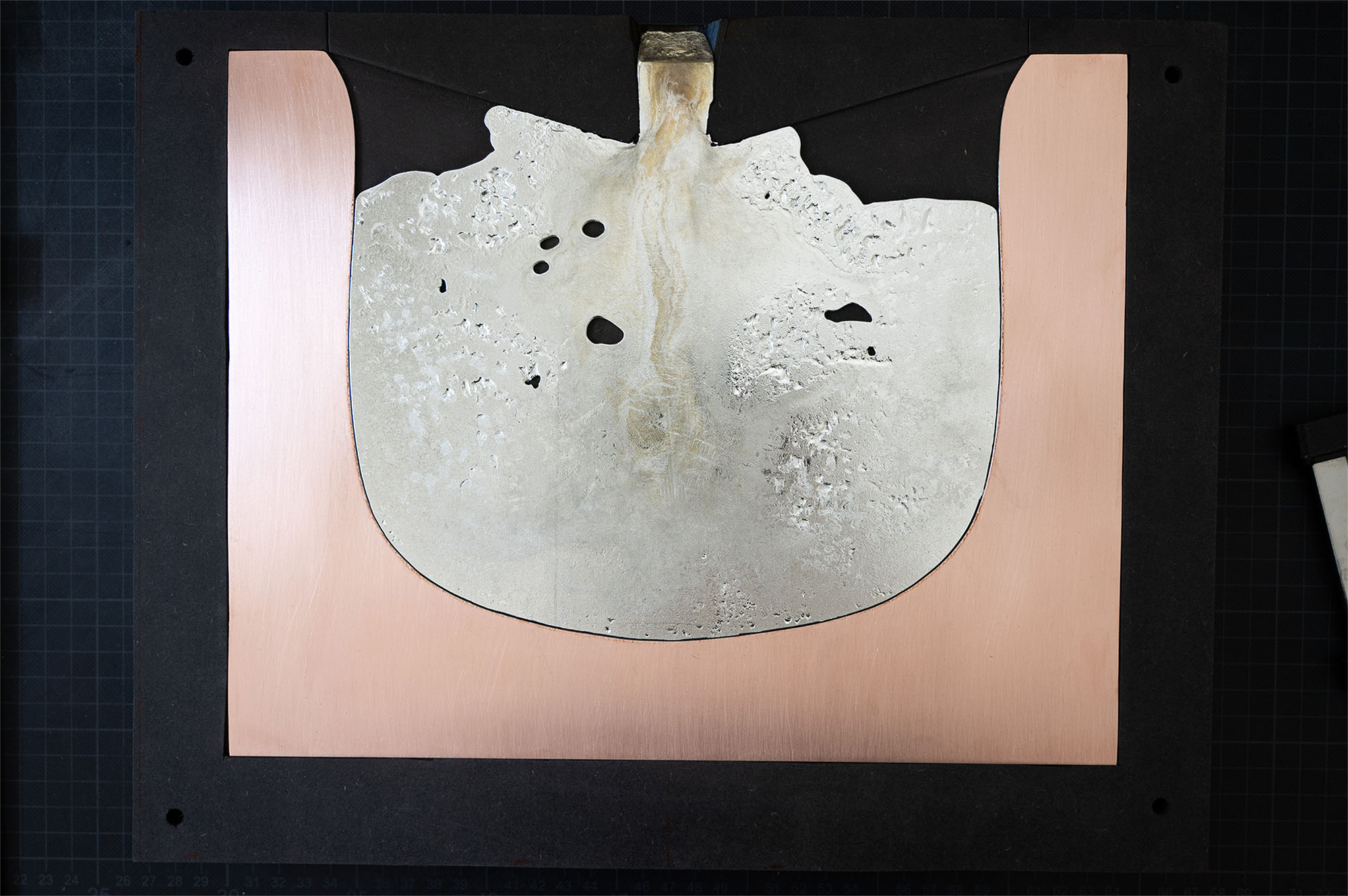
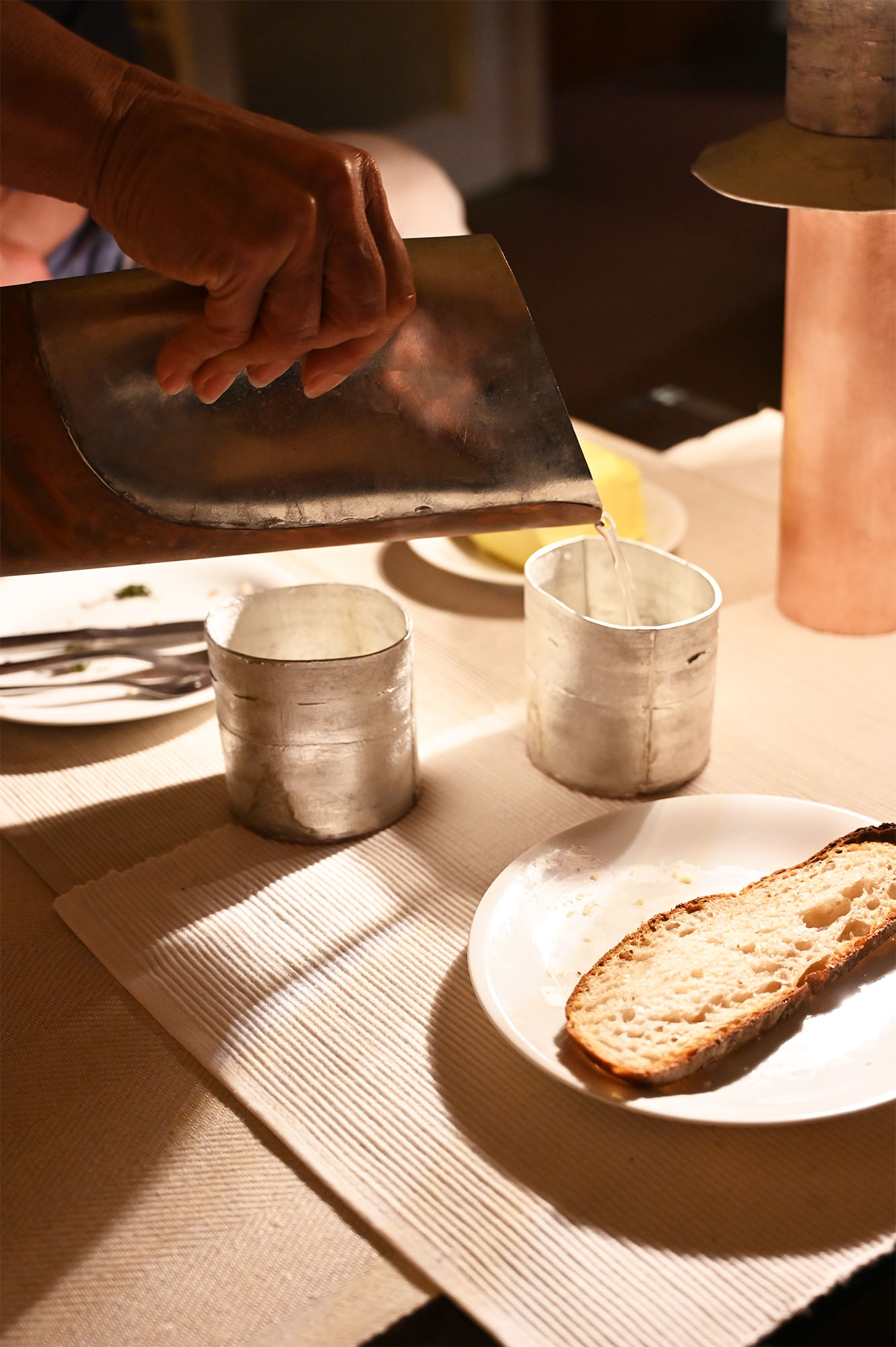
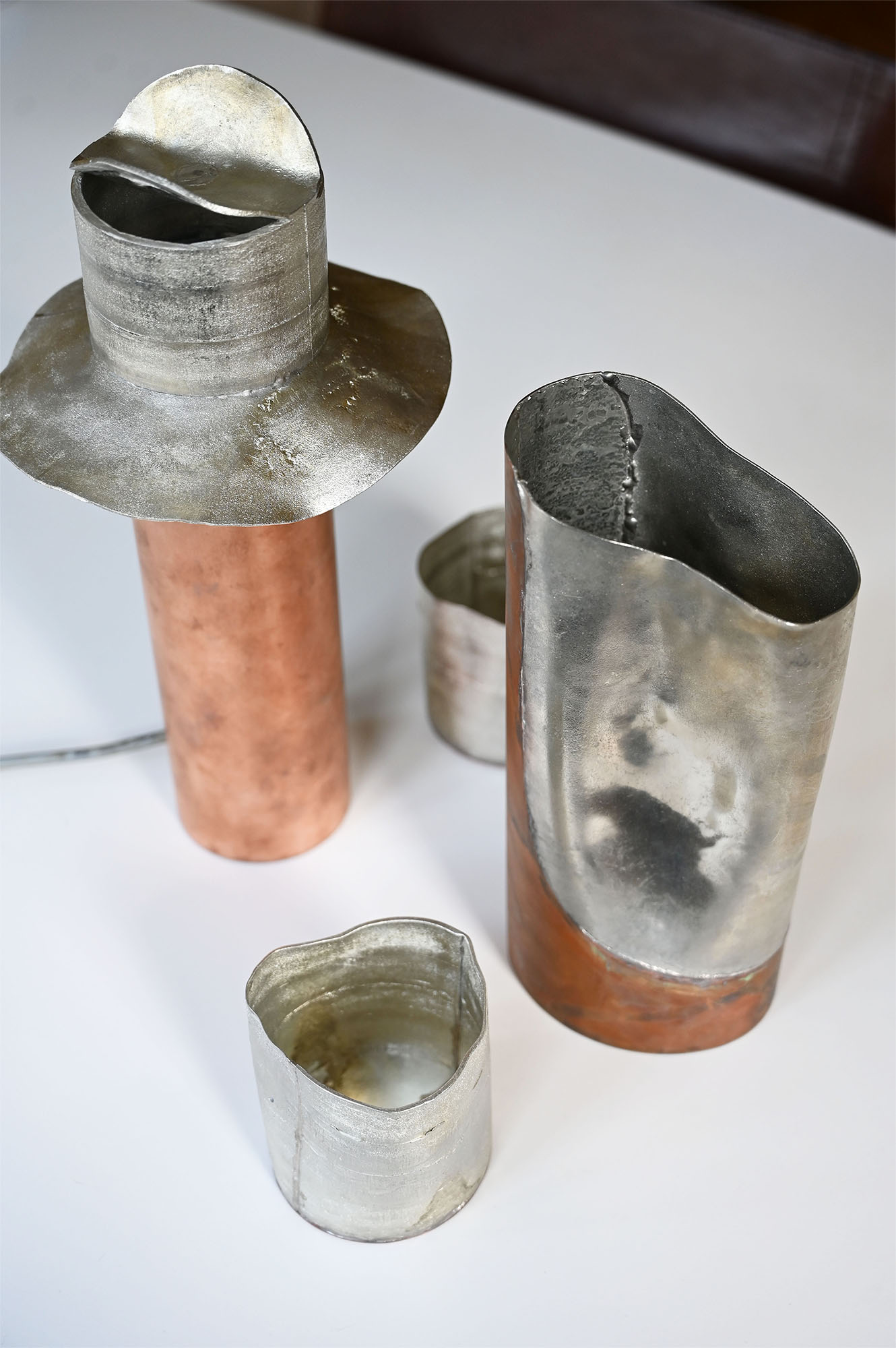
The project examines this question on the basis of experimental works with tin casting in MDF molds. As a soft and easily deformable material, tin reacts directly to touch and use. The three resulting everyday objects—lamp, cup, and carafe—evolve with each use and become personal companions that store memories instead of presupposing perfection. Their design is not understood as a finished result, but as an open process. The users become co-creators whose traces remain permanently visible and continue to write the history of the objects.
 Link to Video
Credits Video: Karoline Heyde