
THINKING THE GAP
Name(s) of graduate(s):
Mona Weißhaupt
2026
Description
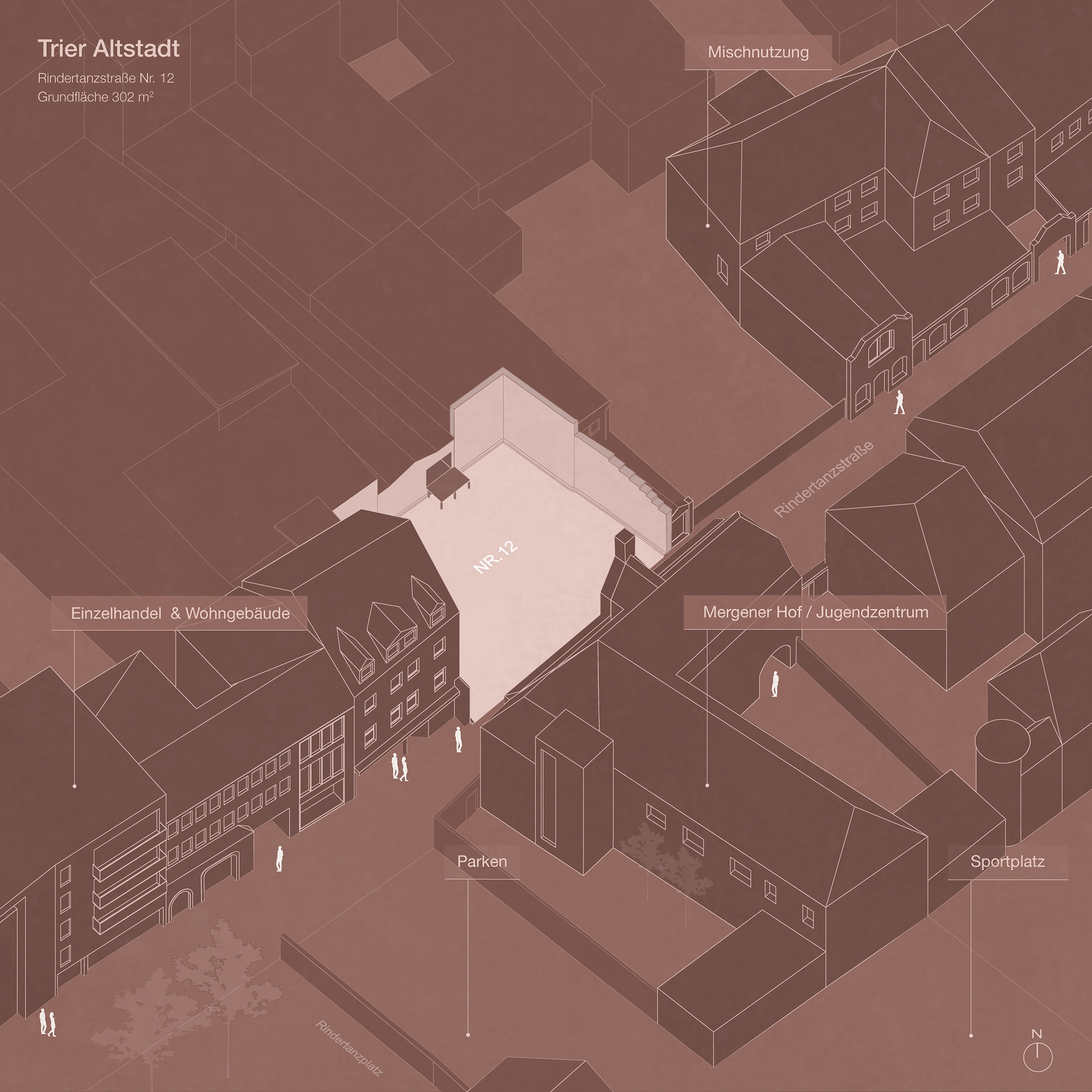
Urban vacant lots are part of everyday city life, but are rarely consciously perceived. They are located where inner cities suffer from compaction, heat, and the loss of freely accessible places to spend time. A study of Trier’s city center shows that most vacant lots are not empty, but functionally occupied. Public space exists, but remains un-vibrant.
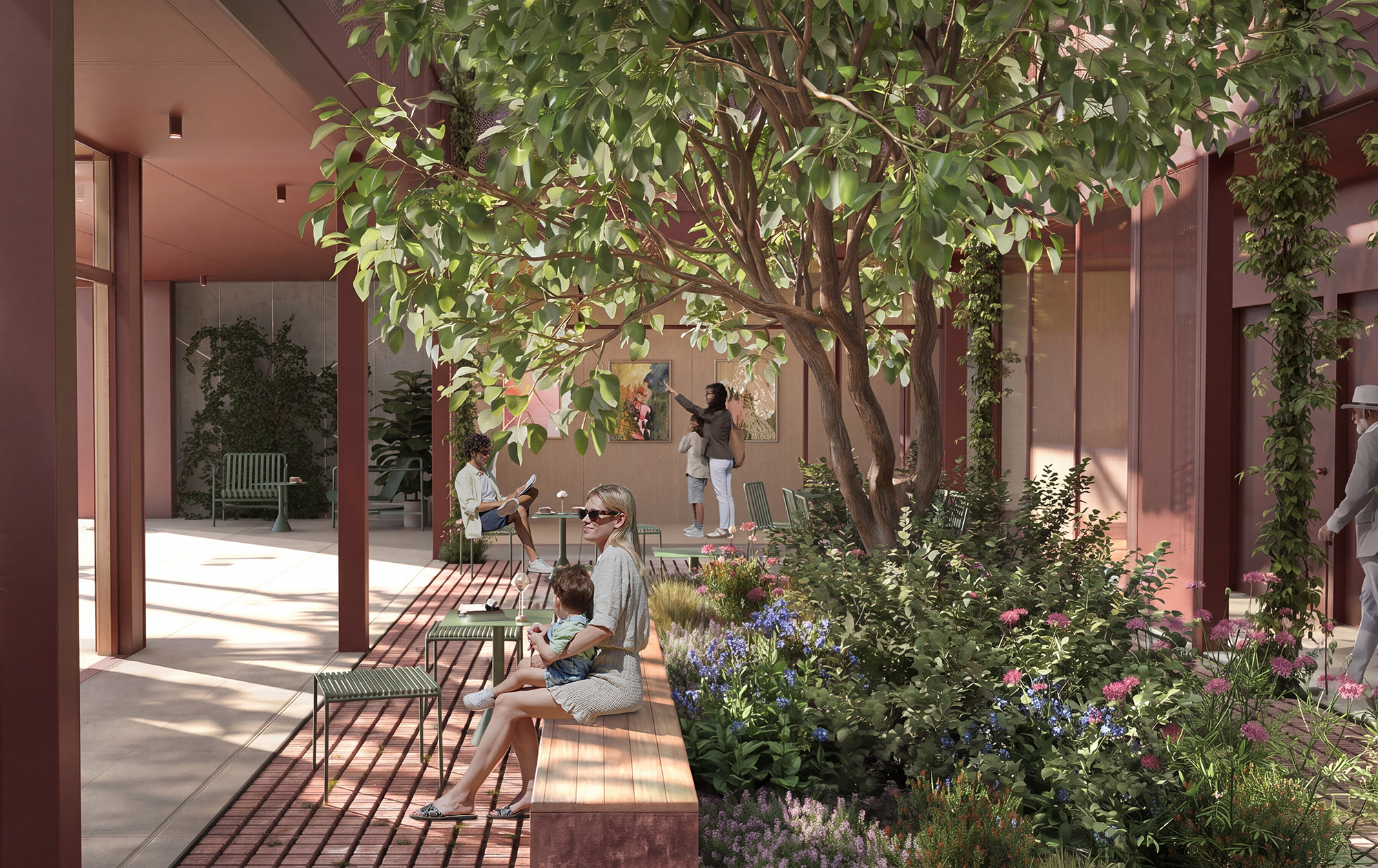
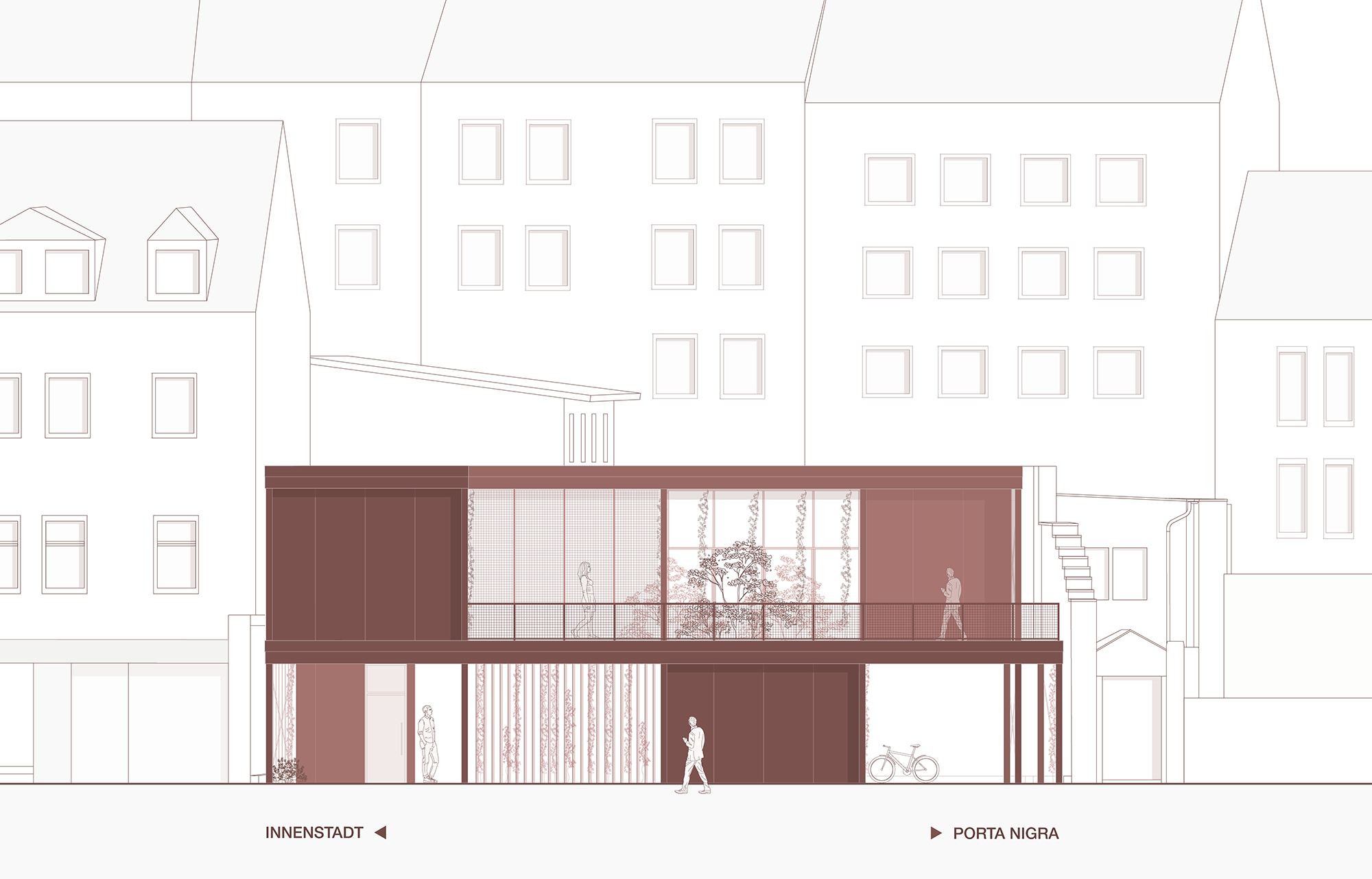
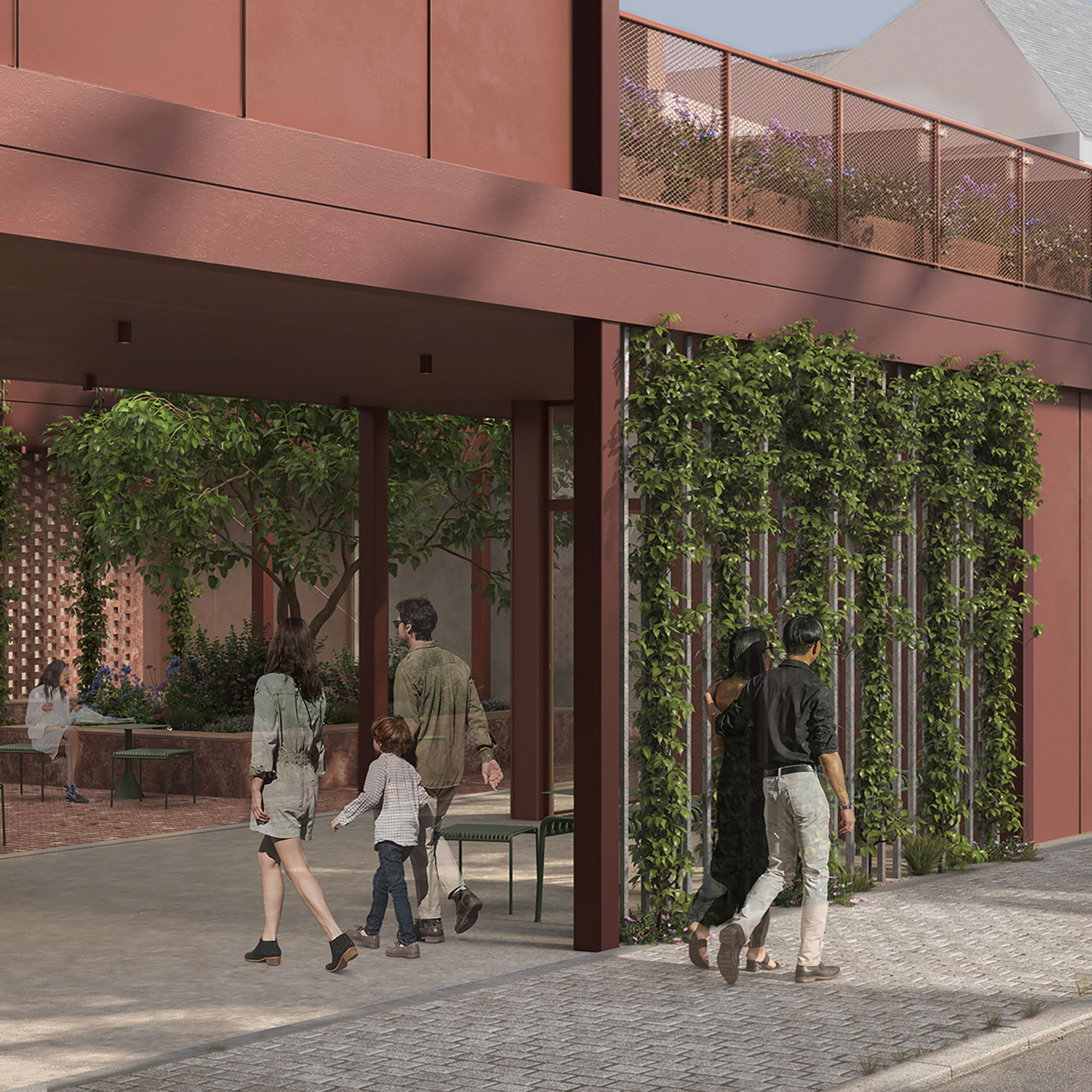
This is where Quartier Nr.12 comes in. Instead of closing the gap, the vacant lot is seen as a social, ecological space of opportunity: a green, consumption-free place where people come together. Three zones divide the area into open, semi-open, and closed sections, thus combining open space, transition, and use in a permeable sequence. A reversible, material-separated supporting structure keeps the structure adaptable. Depaving and greening improve the climate. An adaptable grid reacts to local conditions and shows how residual areas can become places of a climate-friendly, public-good-oriented city.