
HYPERUNIFORMITY
Name(s) of graduate(s):Sebastian Stege
Kooperationspartner: Fakultät Maschinenwesen – Professur für Technisches Design | Center for Interdisciplinary Digital Sciences – Department of Speculative Transformation
September 2024
Instagram
Description
How can abstract scientific knowledge be conveyed in a way that sparks curiosity, becomes understandable, and encourages exchange? This question is at the core of this diploma thesis, which aims to make the little-known mathematical concept of hyperuniformity — an ordering principle with potential applications in biology, physics, and forward-looking urban planning — accessible to a broad public.
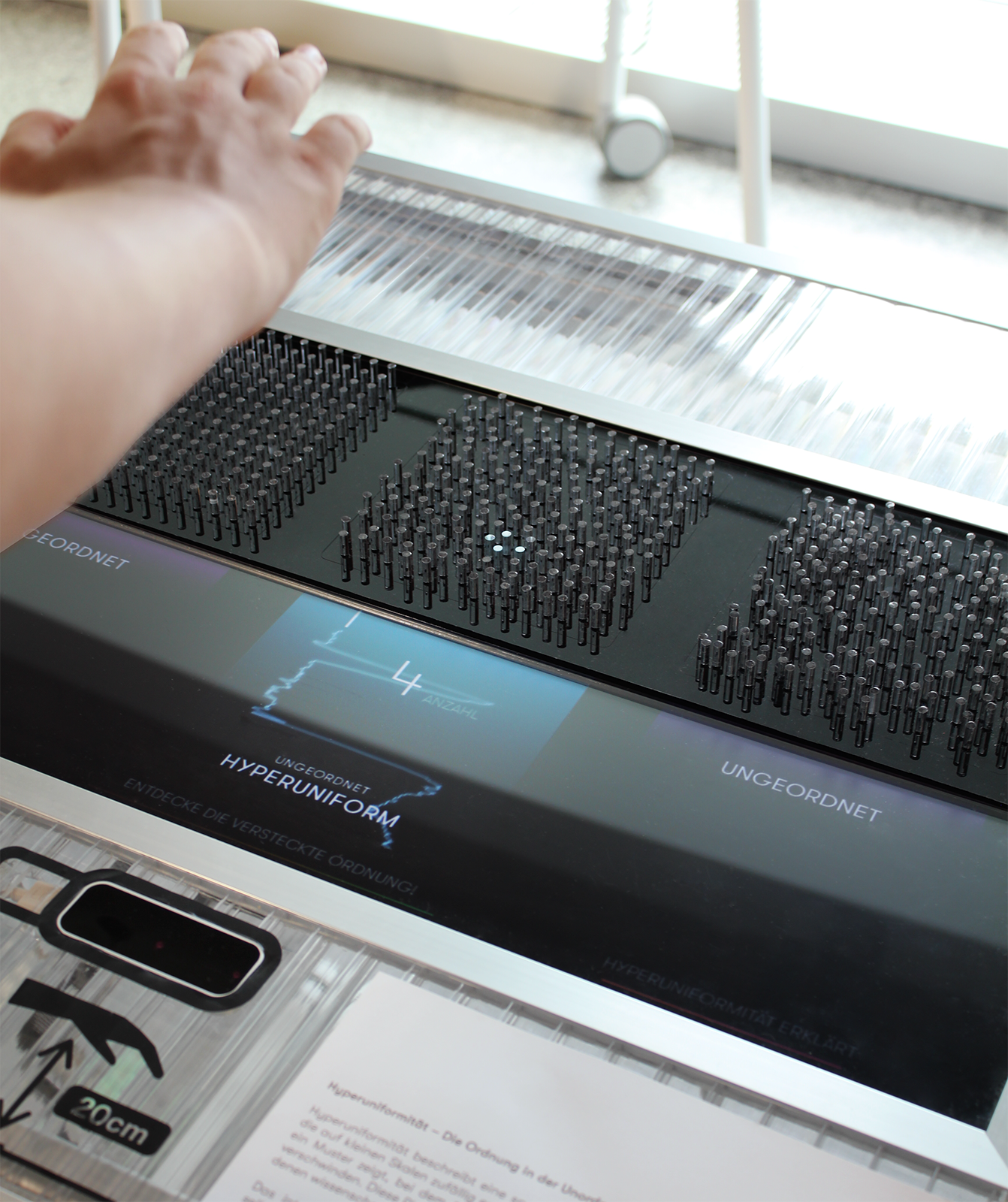
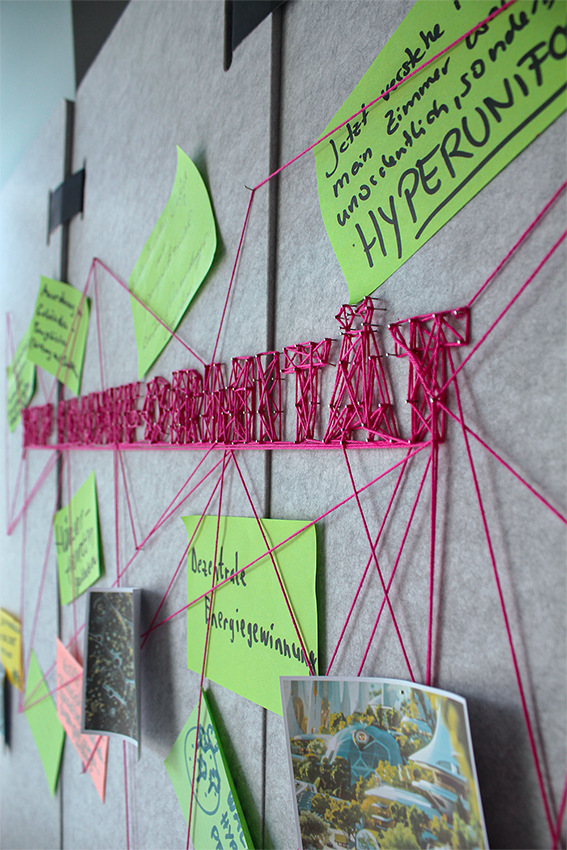
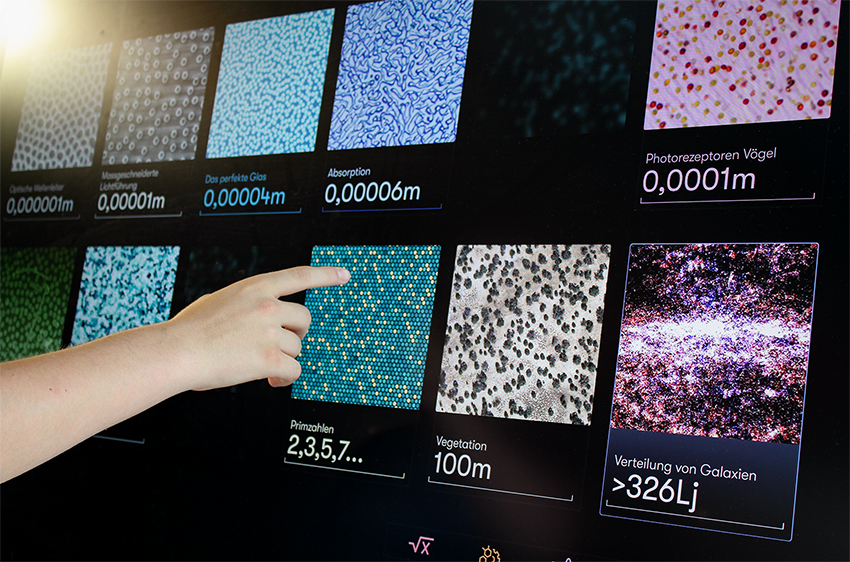
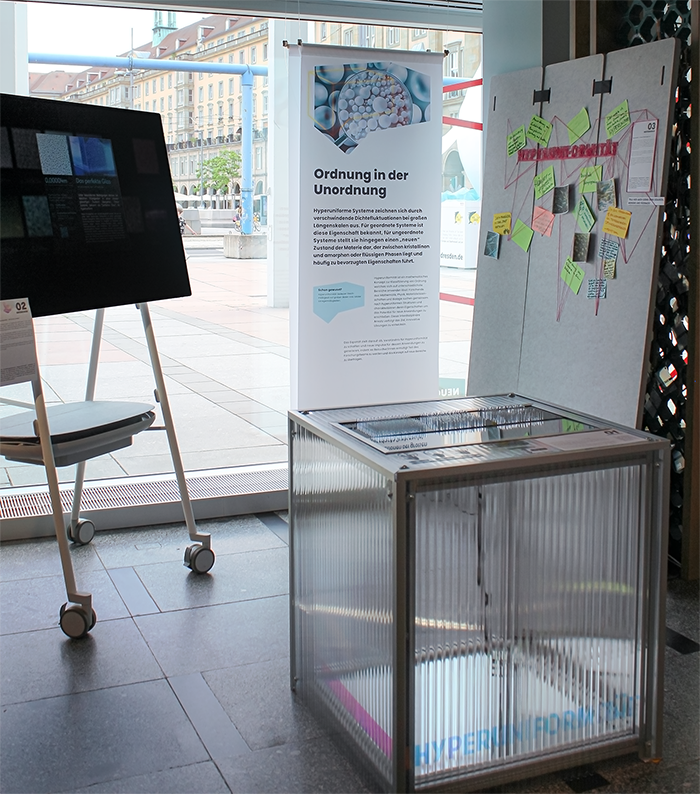
The goal is to make abstract science tangible in public spaces through a comprehensive interactive exhibition concept. Three sequential exhibits were developed: mathematical fundamentals that can be experienced via gesture control (“Understanding”); interactively explorable application examples (“Discovering”); and the contribution of personal perspectives as a starting point for new research (“Re-thinking”).
The final evaluation showed that interactivity, attractiveness, and narrative design motivate visitors to engage openly and actively with complex research.
Sebastian Stege
September 2024
Description
How can abstract scientific knowledge be conveyed in a way that sparks curiosity, becomes understandable, and encourages exchange? This question is at the core of this diploma thesis, which aims to make the little-known mathematical concept of hyperuniformity — an ordering principle with potential applications in biology, physics, and forward-looking urban planning — accessible to a broad public.
The goal is to make abstract science tangible in public spaces through a comprehensive interactive exhibition concept. Three sequential exhibits were developed: mathematical fundamentals that can be experienced via gesture control (“Understanding”); interactively explorable application examples (“Discovering”); and the contribution of personal perspectives as a starting point for new research (“Re-thinking”).
The final evaluation showed that interactivity, attractiveness, and narrative design motivate visitors to engage openly and actively with complex research.