
46144
Name(s) of graduate(s):
Erik Grunder
2026
Description
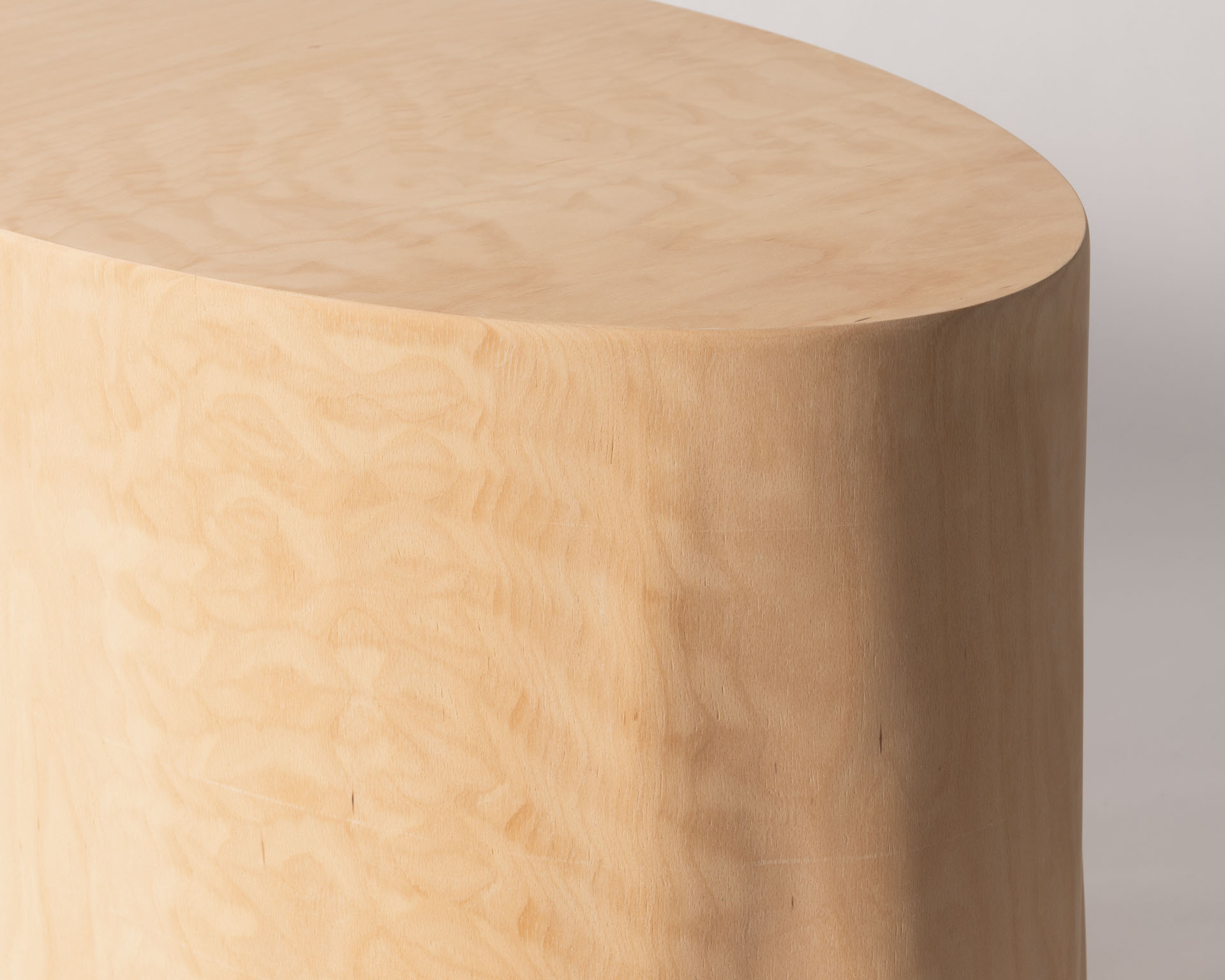
Rotary-cut veneer is a wood processing method that follows the tree’s natural cylindrical form. A debarked and steamed log rotates against a blade, producing a continuous sheet of wood.
Because no sawing is involved, dust and material loss are minimal. Compared to sawn timber, the yield is approximately 30–40% higher.
Veneer is mainly used as a decorative surface material, but also plays an important structural role in engineered wood products such as plywood and laminated composites.
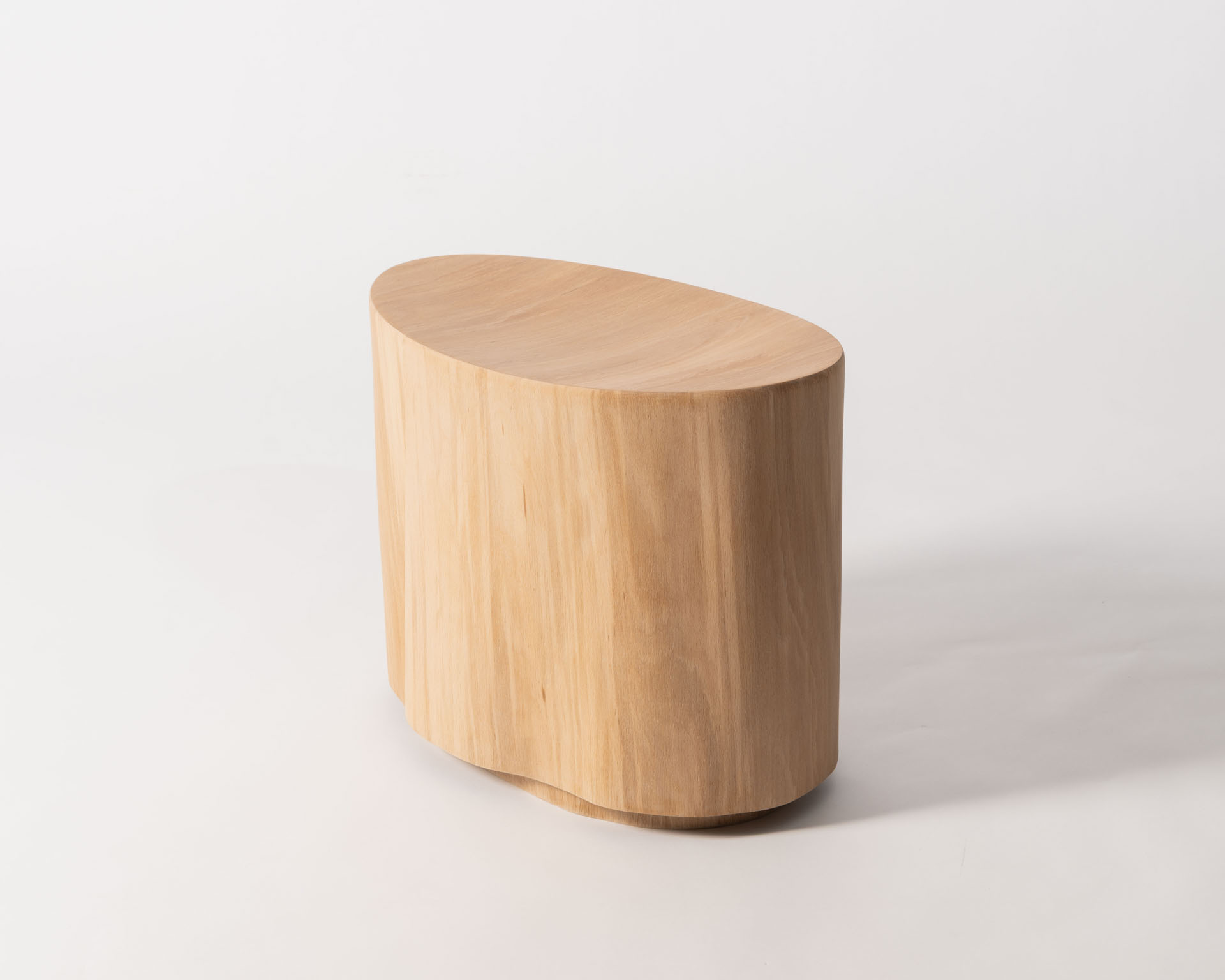
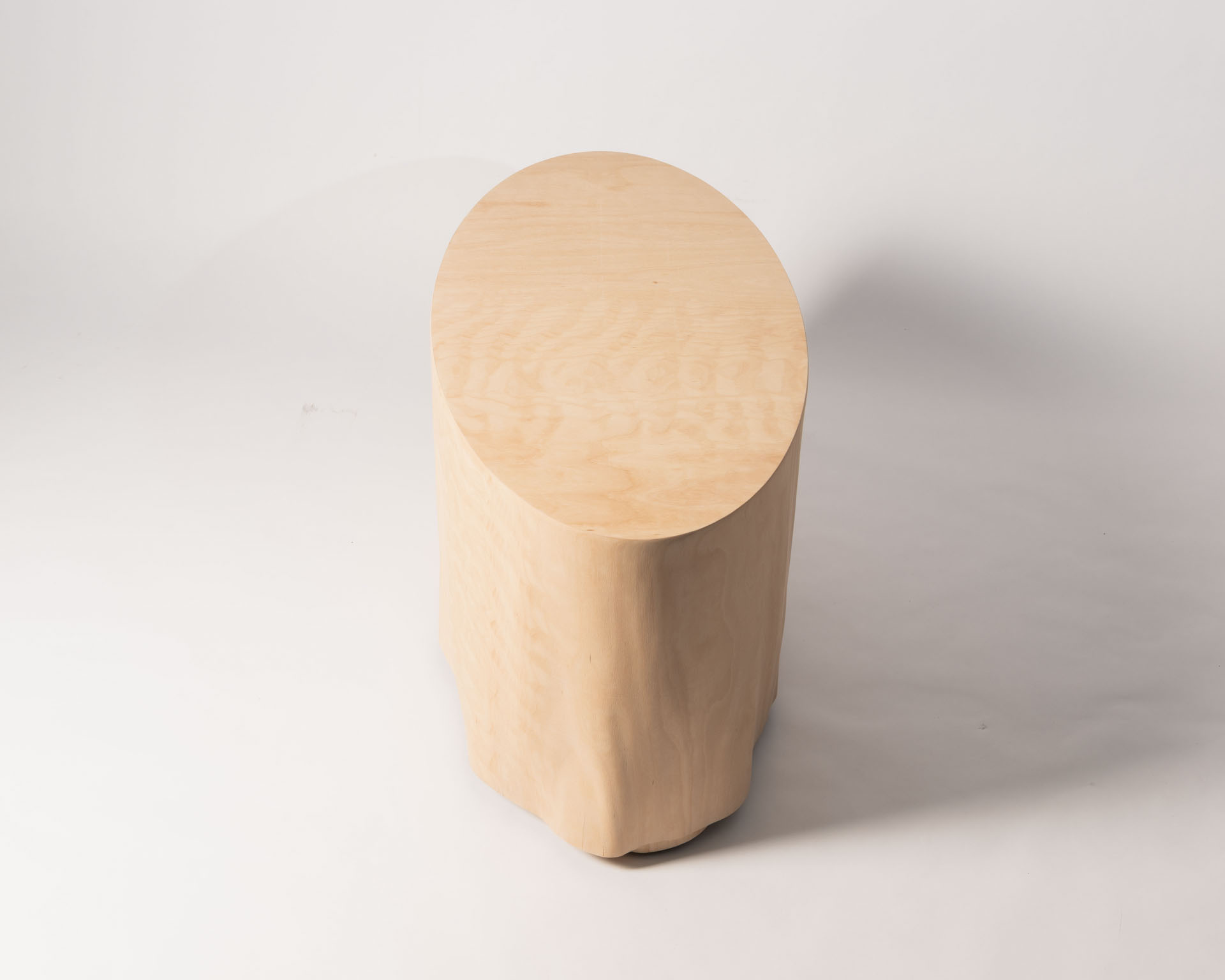
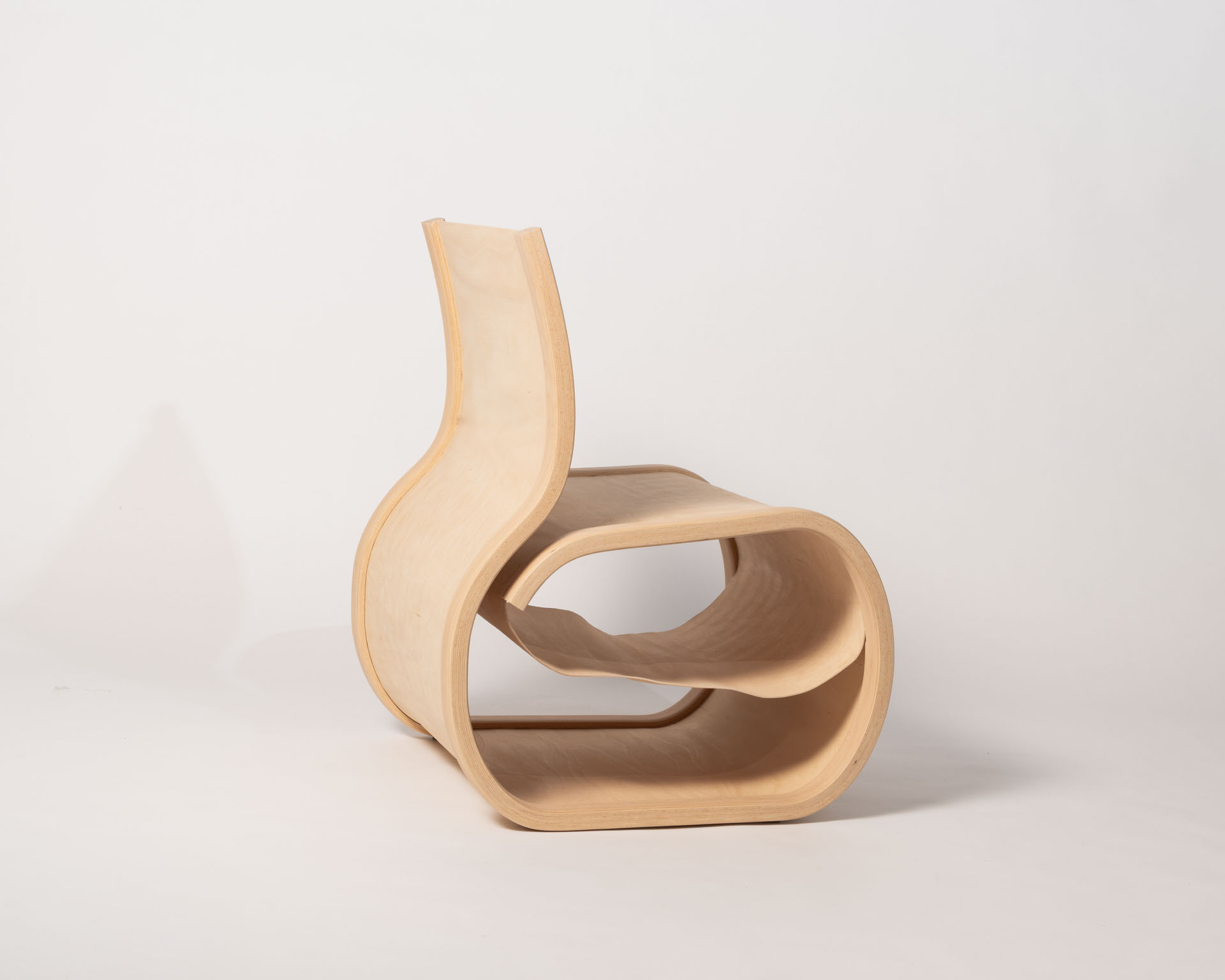
Through small interventions in production, veneer can be extracted as a continuous roll rather than individual sheets. This roll becomes the starting point for a small furniture series.
The 2.5 series explores the structural potential of rotary-cut veneer through a reinterpretation of conventional manufacturing processes.
Credits Video: Erik Grunder