
Unravel
Name(s) of graduate(s):
Joy-Fabienne Enzmann
2026
Description
The thesis examines textile handicraft as an ambivalent cultural phenomenon between oppression, care, resistance, and feminist self-empowerment. Based on the historical role of textile practices in the construction of bourgeois femininity, the work analyzes how knitting, embroidery, and sewing were used over centuries to convey social norms and gender roles. At the same time, it shows that textile handicraft has always been a medium of protest, solidarity, and political expression.
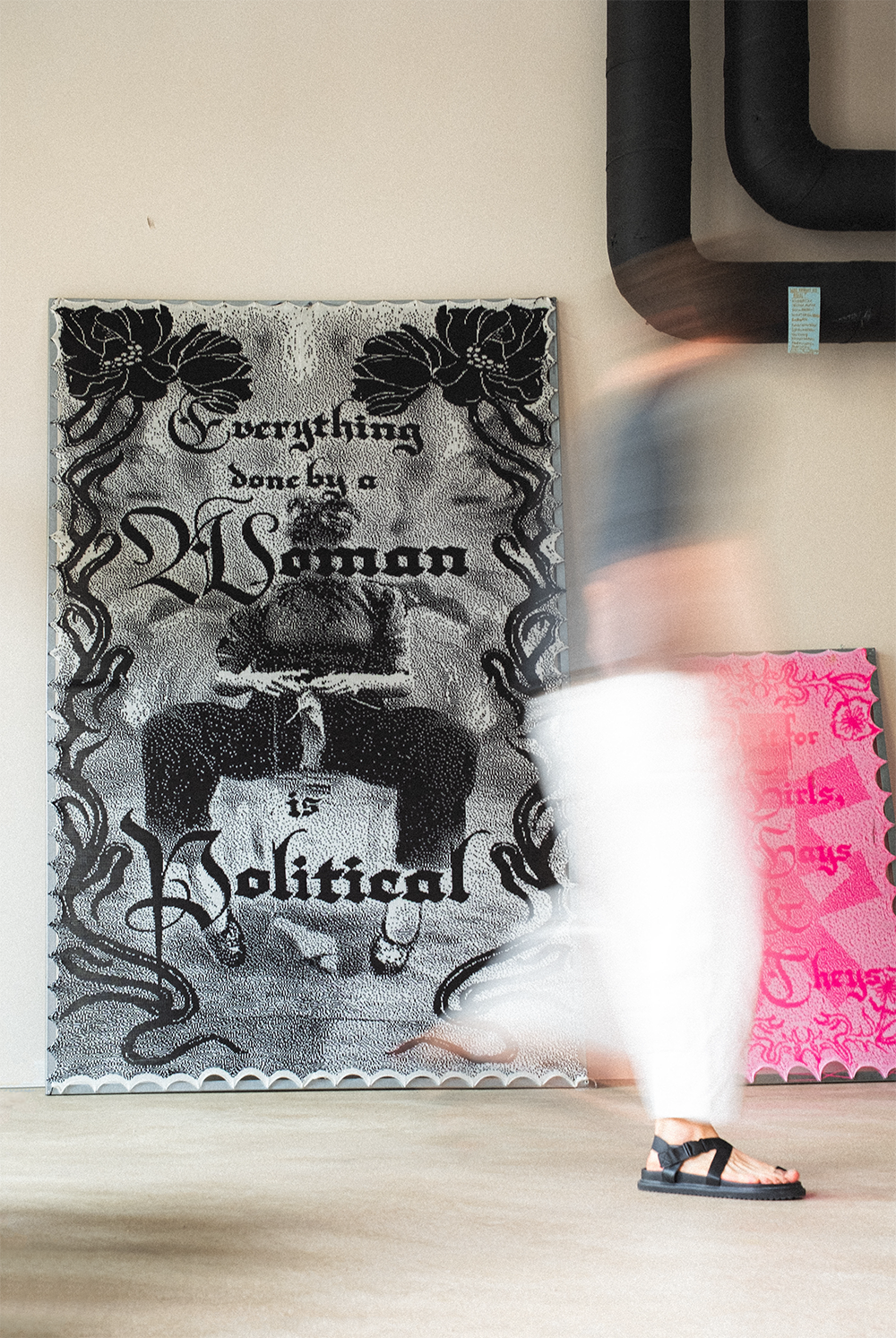
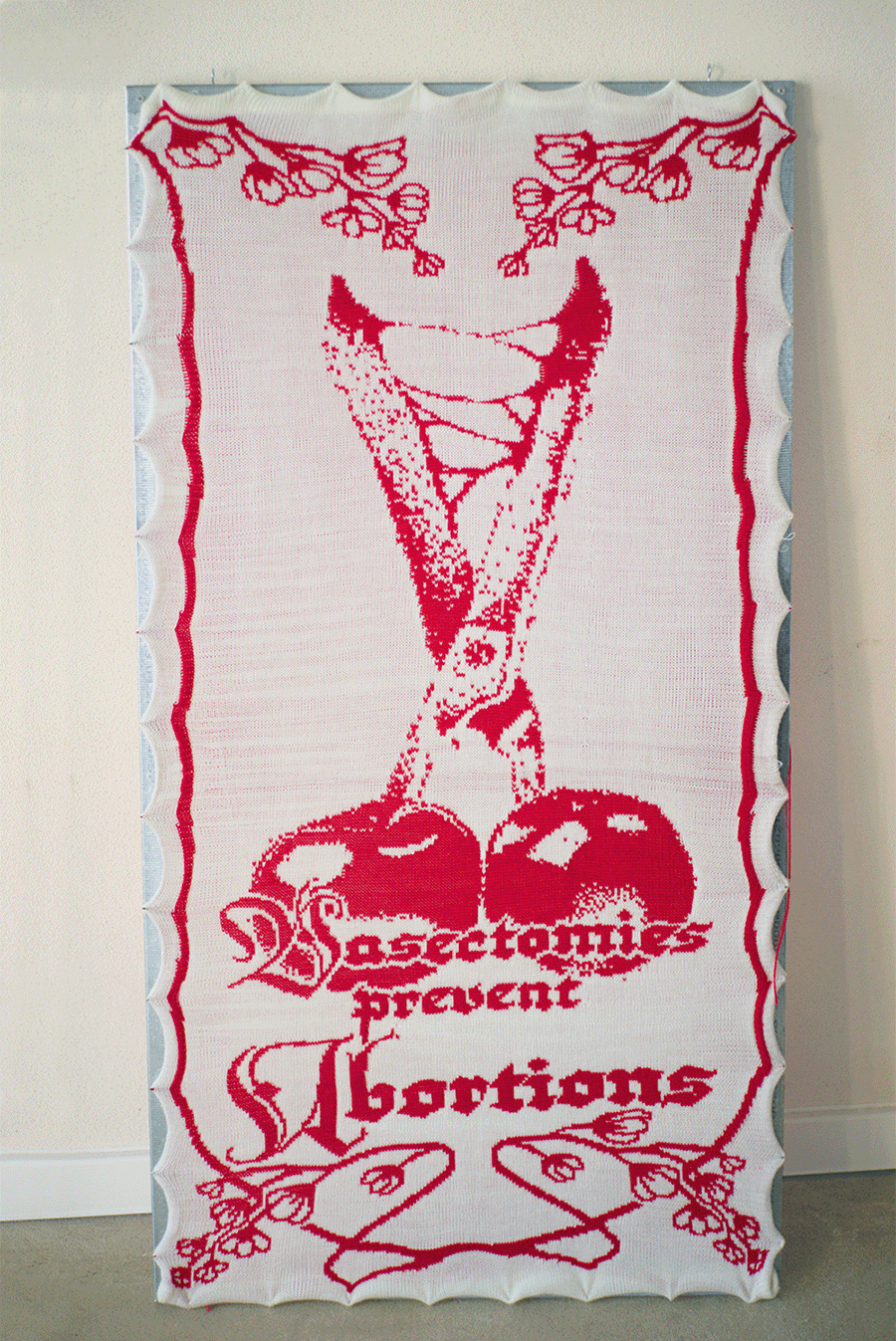
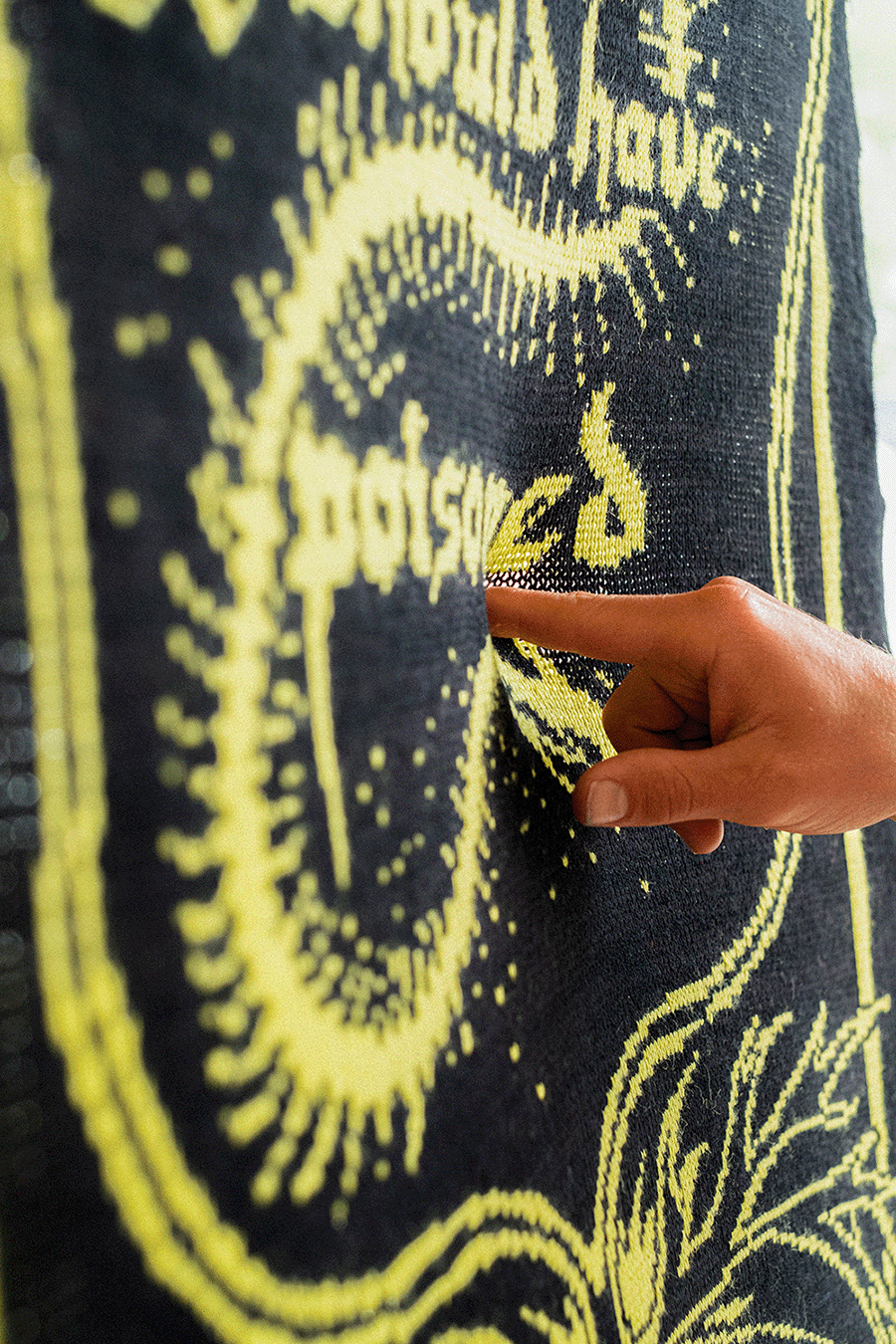
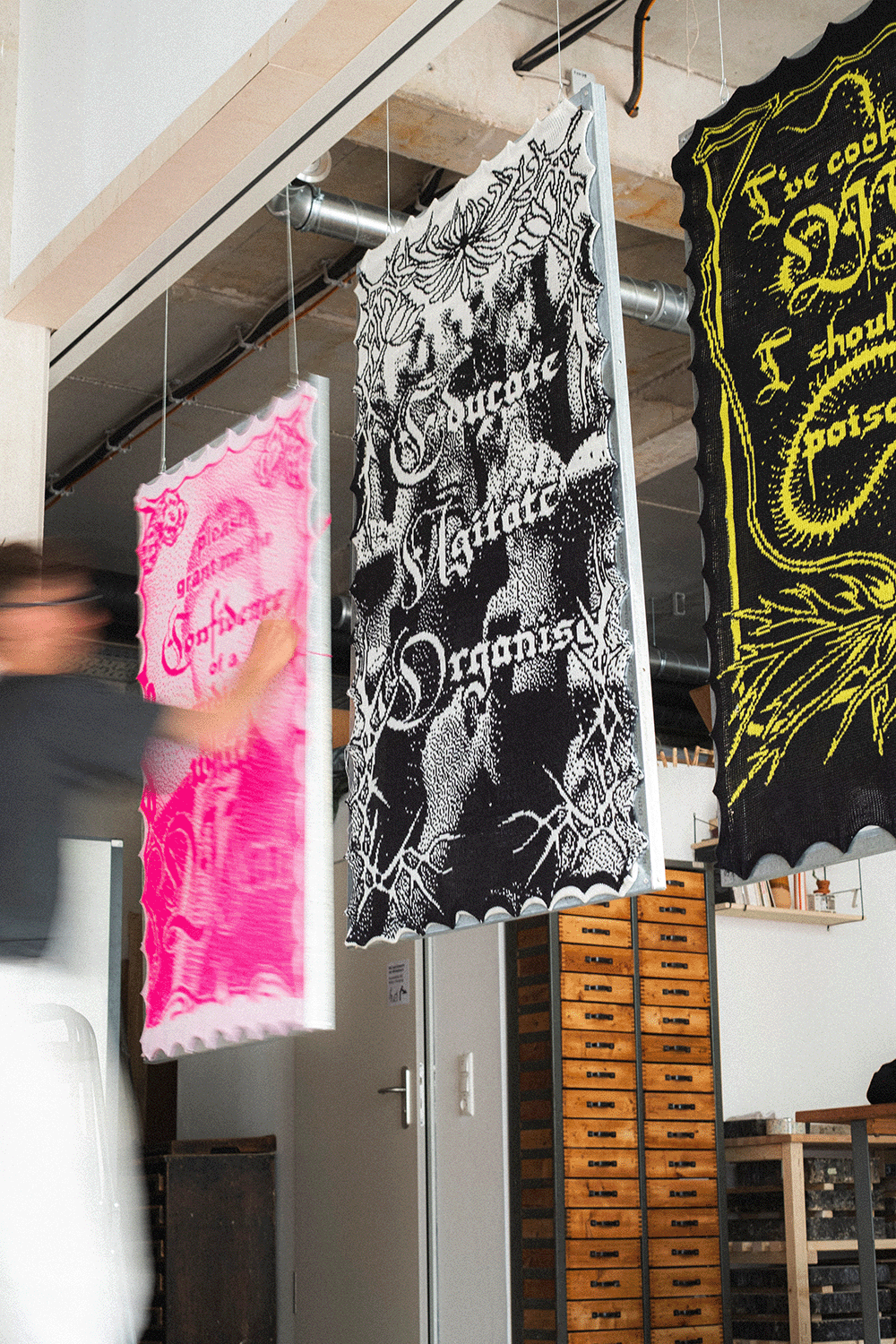
In the practical part, these findings are translated into large-format knitted posters using a hacked knitting machine. The works pick up on the aesthetics of historical sampler cloths and transfer them into a contemporary visual language. The pieces question historical attributions, make female labor visible, and open up new perspectives on the political dimension of textile practices.